
THERAPY FOR WOMEN
ADHD Counselling for Women

You know you’re capable. So why does everyday life feel so hard sometimes?
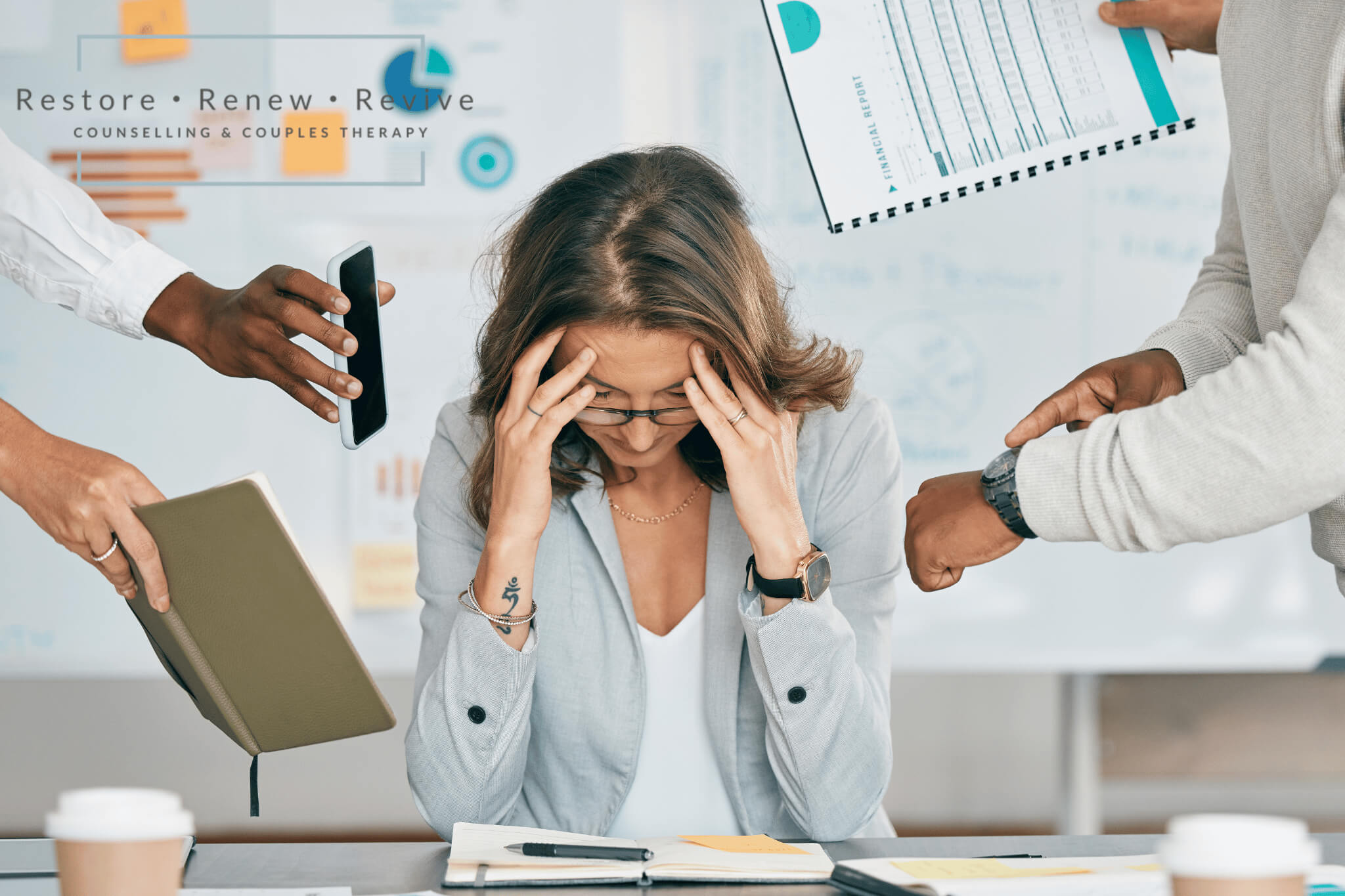
You’re exhausted from trying to keep everything together.
There are a hundred things running through your mind, and no matter how hard you try, you always seem to be forgetting something.
You start the day with the best intentions. You’ve made your list. You know what needs to get done.
But somehow, the day gets away from you.
You get distracted. You put things off. You start one task, remember something else you need to do, and before you know it, you’ve got six things on the go and nothing finished.
And the really frustrating part?
You KNOW what you need to do. You just can’t seem to consistently make yourself do it.

You’ve spent years wondering why things that seem so easy for everyone else are so ridiculously hard for you.
Maybe you’ve been called disorganized, overly sensitive, forgetful, or told that you just need to try harder.
And perhaps you’ve started believing those things about yourself.
You’re tired of feeling like you’re always falling behind.
You’re tired of being so hard on yourself.
And you’re beginning to wonder if there’s something more going on.
ADHD in Women Doesn’t Always
Look the Way You Expect
When you think of ADHD, you might picture a hyperactive little boy who can’t sit still in class.
But ADHD in adult women can look quite different.
Maybe you were a good student. You followed the rules, worked hard, and managed to get things done, even if it meant staying up half the night to finish assignments.
Perhaps you’ve built a successful career, raised a family, or accomplished things you’re genuinely proud of.
From the outside, you look like you’ve got it all together.
But nobody sees just how much effort it takes to keep everything running.
ADHD is a neurodevelopmental condition that affects executive functioning. These are the mental processes that help us organize, prioritize, regulate emotions, manage time, get started on tasks, and follow through on our intentions.
For many women, the challenges are less about being visibly hyperactive and more about the constant mental effort required to manage everyday life.
You might recognize yourself in some of these experiences:
- You feel overwhelmed trying to decide where to start, even when you know exactly what needs to be done.
- You have a hundred browser tabs open in your mind, all competing for attention.
- You struggle to estimate how long something will take, and you’re frequently running late.
- You’re easily distracted, yet sometimes get so absorbed in something interesting that you lose track of everything else.
- You procrastinate until something becomes urgent, even when it’s important to you.
- You have difficulty following through on routines, despite genuinely wanting to.
- You experience intense emotional reactions and have trouble letting go of criticism or perceived rejection.
- You’re constantly exhausted from trying to manage everything.
Not every woman with ADHD experiences all these challenges. And having some of these experiences doesn’t necessarily mean you have ADHD.
But if this sounds familiar, it may be worth exploring.
So Many Women Don’t Recognize Their ADHD Until Adulthood
For years, ADHD research and clinical understanding focused heavily on boys and men.
Girls who weren’t disruptive in the classroom often went unnoticed.
Many learned to compensate by working harder, masking their difficulties, or developing elaborate systems to stay organized.
And those strategies may have worked reasonably well.
Until they didn’t.
Maybe you managed through school but struggled when you moved away from home.
Maybe things became overwhelming after having children, taking on more responsibilities at work, or trying to juggle the demands of family life.
Or perhaps you’ve reached midlife and the strategies you’ve relied on for years just aren’t working anymore.
For some women, receiving an ADHD diagnosis later in life brings an enormous sense of relief.
Suddenly, experiences they’ve spent years blaming themselves for begin to make sense.
But it can also bring grief, anger, or sadness about the years spent struggling without understanding why.
You may find yourself looking back at your life and wondering how things might have been different if you’d known sooner..
Counselling can help you understand the patterns that have left you feeling depleted and find healthier ways of caring for yourself without feeling guilty about your own needs.
ADHD, Motherhood, and Midlife: When Everything Starts Feeling Harder
Being a woman often means juggling an enormous number of responsibilities.
You’re managing work, relationships, family schedules, appointments, household responsibilities, and everyone else’s needs.
And somewhere in all of that, you’re supposed to find time to take care of yourself!
For women with ADHD, the demands of motherhood can place even greater pressure on executive functioning.
You may struggle with the constant interruptions, competing priorities, emotional demands, and the feeling that you’re never really finished anything.
Then comes midlife.
Some women notice that ADHD-related difficulties become harder to manage during perimenopause and menopause. Changes in sleep, mood, cognitive functioning, and hormonal patterns may contribute to these experiences, although research into ADHD and menopause is still developing.
You might notice more forgetfulness, increased emotional sensitivity, difficulty concentrating, or a reduced ability to manage stress.
Things that you used to handle reasonably well suddenly feel overwhelming.
And perhaps you’re wondering:
Why am I struggling so much now when I’ve managed for all these years?
Sometimes the answer isn’t that you’ve become less capable. It’s that the demands on you have changed, your available resources have changed, or the strategies you’ve relied on are no longer enough.
Whether you’re navigating motherhood, perimenopause, or other midlife transitions, counselling can help you understand what’s happening and find new ways of supporting yourself.
The Emotional Side of ADHD That Doesn’t Get Talked About Enough
ADHD isn’t just about being distracted, forgetting appointments, or struggling to stay organized.
It can have a significant impact on how you feel about yourself.
When you’ve spent years struggling to meet expectations, you may have developed some pretty painful beliefs about who you are.
Maybe you’ve started telling yourself that you’re lazy, irresponsible, selfish, or simply not trying hard enough.
Perhaps you’ve become a perfectionist, believing that if you can just work a little harder, stay a little more organized, or stop making mistakes, you’ll finally feel good enough.
You may be especially sensitive to criticism, replaying conversations in your head long after they’re over.
And when you become overwhelmed, you might find yourself snapping at the people you love, withdrawing, crying, or feeling completely shut down.
Then comes the guilt.
You tell yourself you should have handled things differently.
You promise yourself you’ll do better next time.
And the cycle of frustration, shame, and self-criticism continues.
ADHD can also exist alongside anxiety, depression, trauma-related difficulties, and other mental health concerns. Sometimes these experiences overlap, making it difficult to understand what’s contributing to what.
This is where counselling can be particularly helpful.
Not simply in developing strategies to manage ADHD, but in addressing the emotional toll of living for years without understanding your struggles.
How Can ADHD Counselling Help?
When we work together, I’m not going to spend our sessions telling you to buy another planner, make more lists, or just try harder.
You’ve probably tried all of those things already!
Instead, we’ll begin by understanding how ADHD affects you.
We’ll explore the challenges you’re experiencing, the strategies you’ve developed over the years, and the ways ADHD may be affecting your emotions, relationships, confidence, and daily life.
ADHD counselling isn’t about curing ADHD or turning you into someone you’re not.
It’s about helping you better understand yourself, work with the brain you have, and stop feeling like you’re constantly fighting against yourself.
Counselling can also complement medical care or medication management when those are part of your treatment plan.
ADHD Counselling With Someone Who Understands Women’s Mental Health
I’m a Registered Clinical Social Worker with extensive professional development in women’s mental health, including ADHD, anxiety, emotional regulation, motherhood, hormonal transitions, and relationship challenges.
My clinical background includes training in Acceptance and Commitment Therapy (ACT), Cognitive Behavioural Therapy (CBT), somatic approaches, and emotionally focused therapies.
I understand that ADHD rarely exists in isolation from the rest of your life.
Your relationships, responsibilities, emotional well-being, physical health, and experiences throughout different life stages can all influence how ADHD affects you.
My interest in ADHD is informed by both professional learning and personal experience, and I appreciate how frustrating it can be to know what you want to accomplish but struggle to consistently make it happen.
My goal is to help you better understand yourself, recognize your strengths, and develop practical and emotional tools so you can feel more confident, capable, and fulfilled in your everyday life.
Imagine Feeling More Confident Being Yourself
Imagine understanding why certain things have always been so challenging, without immediately blaming yourself.
Imagine being able to recognize when you’re becoming overwhelmed and knowing how to respond before everything feels out of control.
Imagine having systems that actually work for you rather than constantly abandoning another routine you’ve tried to follow.
And imagine being able to appreciate your creativity, curiosity, passion, and strengths instead of focusing exclusively on the things you find difficult.
You don’t have to become a different person to feel better about yourself.
Sometimes, you need a better understanding of who you already are and the support to create a life that works for you.
I draw from approaches such as Acceptance and Commitment Therapy (ACT), Cognitive Behavioural Therapy (CBT), Emotionally Focused Individual Therapy (EFIT), and other evidence-based interventions, depending on your needs and goals.
Our work may involve:
- Understanding how ADHD affects your emotional regulation and executive functioning.
- Building greater self compassion to counter the negative beliefs you’ve developed about yourself.
- Learning how to respond to overwhelming emotions in a more emotionally steady way.
- Finding practical strategies to support organization, time management, task initiation, and follow-through.
- Idenitfying and building systems that work with your strengths rather than constantly fighting against your challenges.
- Exploring how ADHD affects your relationships, boundaries, and ability to communicate your needs.
What Happens in ADHD Counselling for Women?
Free Consult:
You can book a free 15 minute no-obligation call so we can chat more about working together. It’s my hope that even before your first session you’ll have the sense that we can build a strong working relationship together…..and if not, I want to point you in the direction of people who will be able to.
I want my practice space, policies and office hours to be a good fit for you, otherwise, therapy will feel like something stressful you have to squeeze into your busy life, and who needs that.
I want you to have the opportunity to have all your questions answered even before your first session.
You can ask questions about my training, experience, and approach to working with women with ADHD.
Together, we’ll decide whether working together feels like a good fit.
First Session:
Our first session is 50 minutes and is focused on getting to know you, understanding what you’ve been through, and identifying what feels most important for you right now.
People are often really nervous to come to their first counselling session, so I want you know that it’s going to feel just like having a conversation with me.
We’ll talk about the challenges that have brought you to counselling, what you’ve tried in the past, and what you’d like to be different in your life.
We’ll also begin exploring how ADHD may be influencing your experiences, including your emotions, relationships, responsibilities, and sense of self.
I want to understand not just what’s difficult for you, but also your strengths, values, and the things that matter most to you.
Ongoing Therapy:
For the first 2-3 sessions I generally meet with women weekly so that we can build momentum in the right direction. At these sessions, I will check in with you to see how things have been going between sessions.
As we continue working together, we’ll develop a plan that fits your individual needs and goals.
Sometimes that will mean understanding the emotional patterns that keep you feeling overwhelmed or stuck.
Other times, we’ll focus on practical strategies and ways to make everyday life more manageable.
We’ll also pay attention to what actually works for you between sessions, adjusting our approach when something isn’t helpful.
Because having ADHD often means that knowing what to do and being able to consistently do it are two very different things.
My goal is to help you feel more confident in your ability to manage life’s challenges while developing a kinder, more accepting relationship with yourself.
Once you start feeling more confident about maintaining the balance you have been able to find, we will spread out our visits to give you the chance to take the skills we’ve worked on together and test them out as you live your life.
On average I see individuals for 10-20 sessions over a period of time. Of course, this depends on you, your situation and how quickly change starts happening. This is something we will talk about together. Ultimately, I want therapy to be something that adds to your life and doesn’t feel like one more stressful thing to add to your week.
More About Marcy Daniels MSW, RSW
I’m a Registered Clinical Social Worker with extensive training in adult ADHD, women’s mental health, and the emotional and relational challenges that often accompany ADHD.
I help women with ADHD better understand themselves, recognize their strengths, and find practical ways to navigate life’s challenges without constantly feeling overwhelmed or being so hard on themselves.
I also happen to have ADHD.
So I know firsthand that understanding what you need to do and actually being able to do it aren’t always the same thing!
I’ve had to develop my own strategies for managing ADHD and understand the ways it has affected my emotions, relationships, and everyday life.
That personal experience, combined with my professional training and clinical work, has given me a particular appreciation for the challenges women with ADHD can face.
My approach is compassionate, practical, and tailored to your goals. I want you to feel understood and supported, while also helping you find ways to make meaningful changes in your life.
Restore. Renew. Revive. Counselling & Couples Therapy is based in Bedford, Nova Scotia. I offer secure online counselling through JaneApp to clients located in Nova Scotia, New Brunswick, and Newfoundland and Labrador at the time of their appointments.
Frequently Asked Questions About ADHD Counselling
Do I need an ADHD diagnosis to start counselling?
No. You don’t need a formal diagnosis to explore difficulties with attention, executive functioning, emotional regulation, or other concerns that may be related to ADHD.
If you’re wondering whether you have ADHD, counselling can help you better understand your experiences and explore whether a formal assessment would be useful.
Can ADHD counselling help if I already take medication?
Yes. Medication can be helpful for many adults with ADHD, but it doesn’t necessarily address every challenge.
Counselling can complement medication by helping you develop practical strategies, improve emotional regulation, address self-esteem, and navigate relationship difficulties.
Can therapy help with ADHD-related anxiety and overwhelm?
Yes. Many women with ADHD also experience anxiety, often related to the effort required to manage responsibilities, compensate for difficulties, or avoid making mistakes.
Therapy can help you understand how these patterns interact and develop approaches that reduce overwhelm and support emotional well-being.
How much do counselling sessions cost?
Individual therapy sessions cost $180/50 minutes
My services are covered by most insurance plans and I am able to direct bill to most insurance companies. I also offer a limited number of reduced fee spots through Open Path Collective.
If direct billing is not available for your plan, you will receive a detailed receipt that you can submit to your insurance provider yourself or keep for income tax purposes.
I recommend you check your plan specifics before scheduling a session.
Is ADHD counselling just about learning to be more organized?
Not at all.
Although organization, time management, and task initiation may be part of our work, ADHD also affects emotions, self-esteem, relationships, and your overall sense of well-being.
Therapy can help you address both the practical and emotional aspects of living with ADHD.
Why does my ADHD seem worse during perimenopause?
Hormonal changes, particularly fluctuations in estrogen, may influence attention, memory, and emotional regulation.
For women with ADHD, these changes can sometimes make previously manageable symptoms more difficult.
Sleep disruptions, stress, and increased responsibilities during midlife can also contribute.
Counselling can help you explore the different factors affecting your functioning and identify strategies to manage them.
Do you offer online ADHD counselling?
Yes. I provide individual ADHD counselling through secure online video appointments for adults in Nova Scotia, New Brunswick, and Newfoundland and Labrador.
Online sessions offer a convenient way to access support without the additional demands of travelling to appointments.
What are your office hours? Where are you located?
I am available for therapy sessions
Monday/Tuesday/Wednesday/Thursday 2 pm-9 pm
Friday 8 am-5 pm
Saturday 9 am-5 pm.
All sessions are provided through secure video using JaneApp, a privacy-compliant platform designed for healthcare services. I am licensed to work with clients who are physically located in Nova Scotia, Newfoundland and Labrador, and New Brunswick at the time of their appointment.
You Don’t Have to Keep Working So Hard Just to Keep Up
If you’ve spent years feeling overwhelmed, frustrated with yourself, or wondering why everyday life seems harder than it should, ADHD counselling may help you find a different way forward.
You don’t need to become a completely different person.
You can learn to understand your brain, work with your strengths, and build a life that feels more manageable and rewarding.
Book a free 15-minute consultation to explore whether ADHD counselling is the right fit for you.
Your Next Steps:
Here are some of the ways I help women:
Anxiety
Self Esteem
Separation, Divorce & Relationships
Pregnancy, Postpartum & Motherhood
Stress, Burnout & Life Balance
Midlife Transitions & Life Changes

Resources


1600 Bedford Highway Suite 220, Bedford, NS B4A IE8, Canada I (902) 702-7722 I info@restorecounselling.ca
Office Hours: Mon/Tu/Wed/ Thurs 2pm-9pm Friday 8am-5pm Saturday 9am-5pm
Reception Hours: Mon-Fri 9am - 5pm
Copyright 2021 © Restore. Renew. Revive | All Rights Reserved | Privacy & Terms | Website by Windrose Web Design